

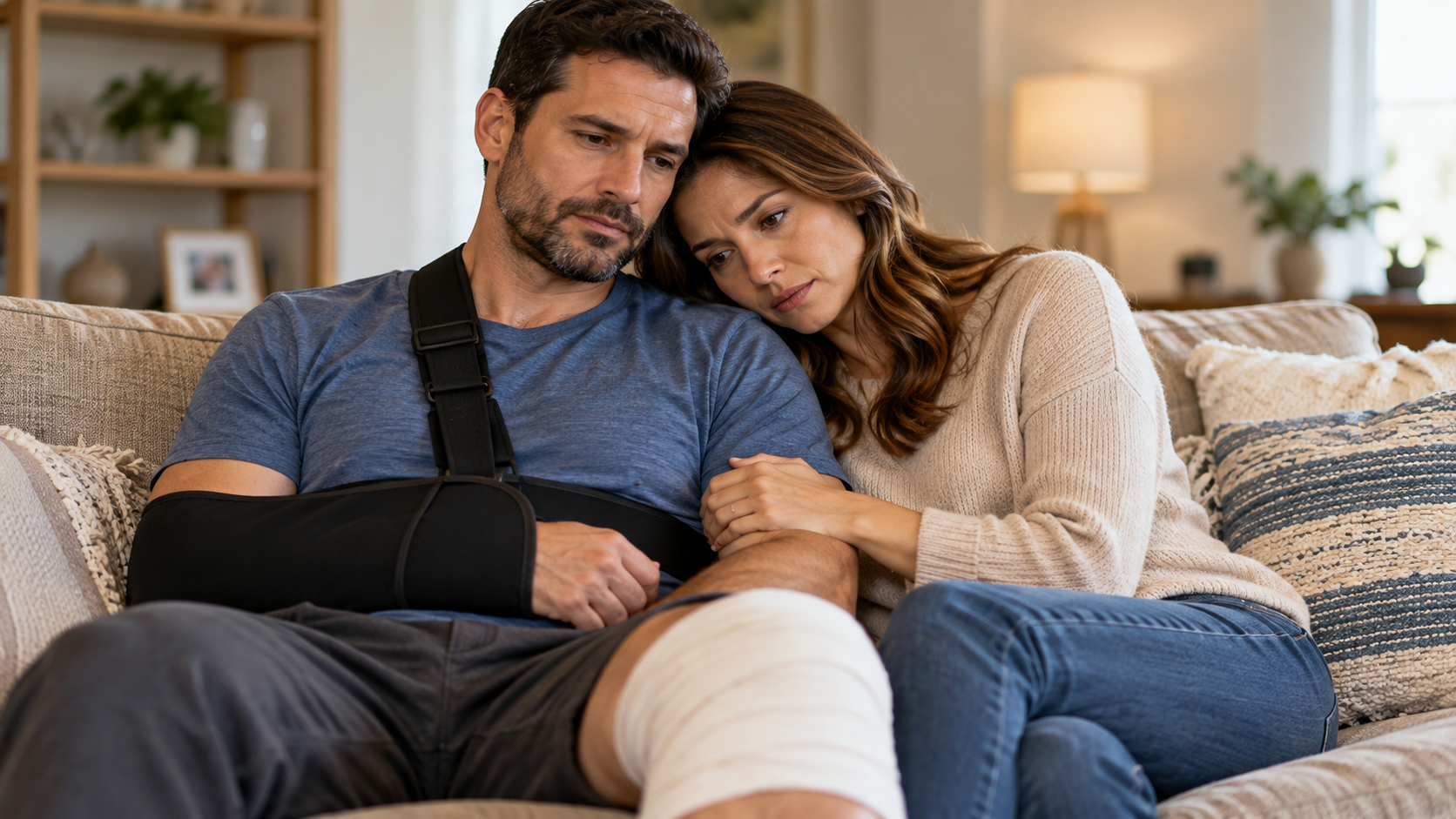
When someone suffers a serious injury, the effects often reach beyond the person who was hurt. A spouse or partner may suddenly take on new responsibilities, lose the companionship they once shared, or experience major changes in their relationship.
California law recognizes some of these losses through what's known as a loss of consortium claim. It's a separate type of damage related to the impact an injury has on a spouse or qualifying partner.
Loss of consortium refers to the loss or impairment of certain benefits of a marital relationship after one spouse is injured.
This can include the loss of love, companionship, comfort, care, assistance, affection, moral support, and sexual relations.
Unlike a medical bill or lost paycheck, these losses don't have an obvious dollar amount attached to them. The focus is instead on how the injury has actually changed the relationship.
In California, loss-of-consortium claims are generally associated with spouses and qualifying domestic partners.
The person who was physically injured isn't seeking loss-of-consortium damages for themselves. The claim concerns what their spouse or qualifying partner has lost because of the injury.
The relationship before and after the injury matters. The claimant generally needs to show how the injury changed the companionship, support, affection, or other aspects of the relationship.
Loss of consortium is generally considered a form of noneconomic damage. Rather than reimbursing a specific expense, it addresses changes to the relationship itself.
Depending on the circumstances, that can include the loss or impairment of:
These damages can become part of the broader discussion about compensation available through a personal injury claim.
A loss-of-consortium claim depends on the underlying injury claim. There first needs to be a legally actionable injury to the claimant's spouse or partner.
That makes the two claims closely connected, but the damages aren't identical.
The injured person might seek compensation for medical expenses, lost income, pain, and other losses. Their spouse or partner would instead need to establish how the injury affected their relationship.
The underlying injury can come from many different circumstances. For example, a serious Uber or Lyft accident could lead to significant injuries that affect not only the person involved in the crash but also their spouse or partner.
There usually isn't a single document that proves loss of consortium.
Instead, the circumstances of the relationship before and after the injury become important. A serious injury might prevent someone from participating in activities the couple previously enjoyed, providing the same level of care or assistance at home, or maintaining the same degree of physical and emotional intimacy.
Evidence will depend on the individual case. Testimony and other evidence showing the nature of the relationship and how it changed can help establish the extent of the loss.
The goal isn't simply to show that life became more difficult. It's to demonstrate how the injury affected the specific aspects of the relationship that California law recognizes.
Deadlines are another reason not to wait too long before looking into your options.
For many California personal injury lawsuits, the general deadline is two years from the date of the injury. Different deadlines and exceptions can apply depending on the circumstances, particularly when a government entity is involved.
Because a loss-of-consortium claim is tied to an underlying injury case, getting legal guidance early can help determine which deadlines apply to a particular situation.
A serious accident can change much more than one person's health. It can affect routines, responsibilities, intimacy, companionship, and everyday family life.
A loss-of-consortium claim is one way California law recognizes some of those effects. Whether a particular situation qualifies depends on the relationship, the underlying injury, and how that injury has affected the claimant.
If a serious injury has affected you and your family, Tim Wright Law can help you understand the types of compensation that may be available in a California personal injury case. You can contact Tim Wright Law to discuss your situation and the options that may be available.


