

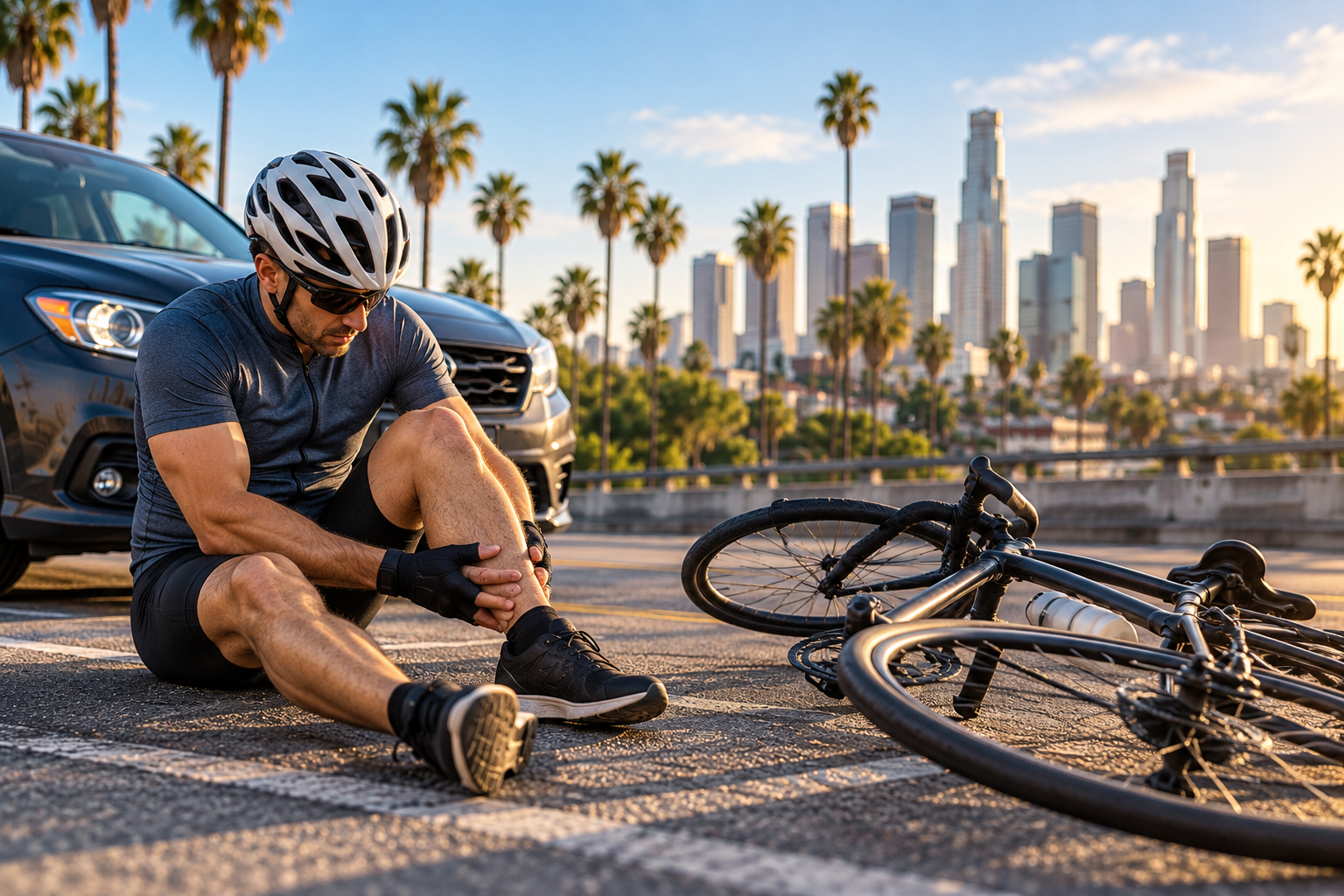
A bicycle accident can leave you shaken, injured, and unsure of what to do next. In Los Angeles, where cyclists often share busy streets with cars, rideshare vehicles, delivery trucks, and other traffic, even a short ride can turn serious in seconds.
What you do after a crash can matter. Taking a few practical steps can help protect your health, preserve important evidence, and make the insurance or legal process easier to navigate later.
Your health comes first. If you're able to safely move out of traffic, do so and call 911, especially if anyone has been injured.
Some injuries aren't immediately obvious after an accident. Adrenaline can make pain less noticeable, and symptoms may become more apparent hours later.
If you're physically able, take photos or videos of the scene before things change. Try to capture:
You should also exchange information with the driver and get contact information from anyone who witnessed the crash. Tim Wright Law similarly recommends calling 911, documenting the scene, exchanging information, and identifying witnesses after a bicycle accident. Tim Wright Law
Even if you don't think you're seriously hurt, getting checked by a medical professional can be important.
A bicycle provides very little protection when a cyclist is struck by a vehicle. Injuries involving the head, neck, back, shoulders, or knees may not be fully apparent at the scene.
Medical records can also help establish when your symptoms began and what treatment you needed after the accident.
Keep copies of your medical records, bills, prescriptions, and other expenses associated with your recovery.
Fault isn't always as simple as deciding that either the cyclist or driver caused the crash.
California uses comparative fault principles, meaning responsibility can be divided between the people involved. If an injured cyclist is found partly responsible, that can affect the amount of damages they ultimately recover.
Evidence becomes especially important when the parties disagree about what happened. Depending on the accident, that could include:
California also has traffic laws that apply specifically to people riding bicycles, so the circumstances surrounding the collision need to be considered carefully.
Don't throw away or repair your bicycle immediately if there's a possibility that you'll make an injury claim.
The condition of the bicycle itself may provide useful information about the collision. The same can be true of a damaged helmet or clothing.
Other information worth preserving may include cycling-app data, GPS records, photographs, medical paperwork, receipts, and communications with insurance companies.
It can also help to write down what you remember about the accident while it's still fresh in your mind.
Evidence doesn't remain available forever. Video can be overwritten, witnesses can become harder to locate, and the accident scene itself can change.
The compensation available after a bicycle accident depends on the circumstances of the crash and the injuries involved.
A personal injury claim may include losses such as:
A serious injury may also have effects that aren't immediately apparent. Someone who initially expects to miss a few days of work, for example, may later learn that additional treatment or rehabilitation is necessary.
That's why understanding the extent of an injury can be important before resolving an insurance claim.
You don't have to wait until an insurance company denies your claim before speaking with an attorney.
Legal guidance may be particularly useful when the accident involves serious injuries, disputed fault, multiple vehicles, a commercial driver, or a government entity.
A bicycle accident lawyer can review what happened, help preserve evidence, communicate with insurance companies, and explain what options may be available based on the circumstances.
California also places deadlines on personal injury cases. Some situations can involve different or shorter requirements, so it's important to determine which deadlines apply rather than assuming you have plenty of time.
Tim Wright Law specifically handles bicycle accident claims as part of its personal injury practice. Tim Wright Law
Recovering from a bicycle accident isn't always quick. You may be dealing with medical appointments, time away from work, bicycle repairs, and insurance calls all at once.
You don't need to have every answer immediately. Start with your health, document what you can, preserve important evidence, and learn about your options before making decisions about your claim.
If you've been injured while cycling in Los Angeles, Tim Wright Law can review the circumstances of your accident and explain the options that may be available. The firm offers free consultations for people seeking help after an injury.


