

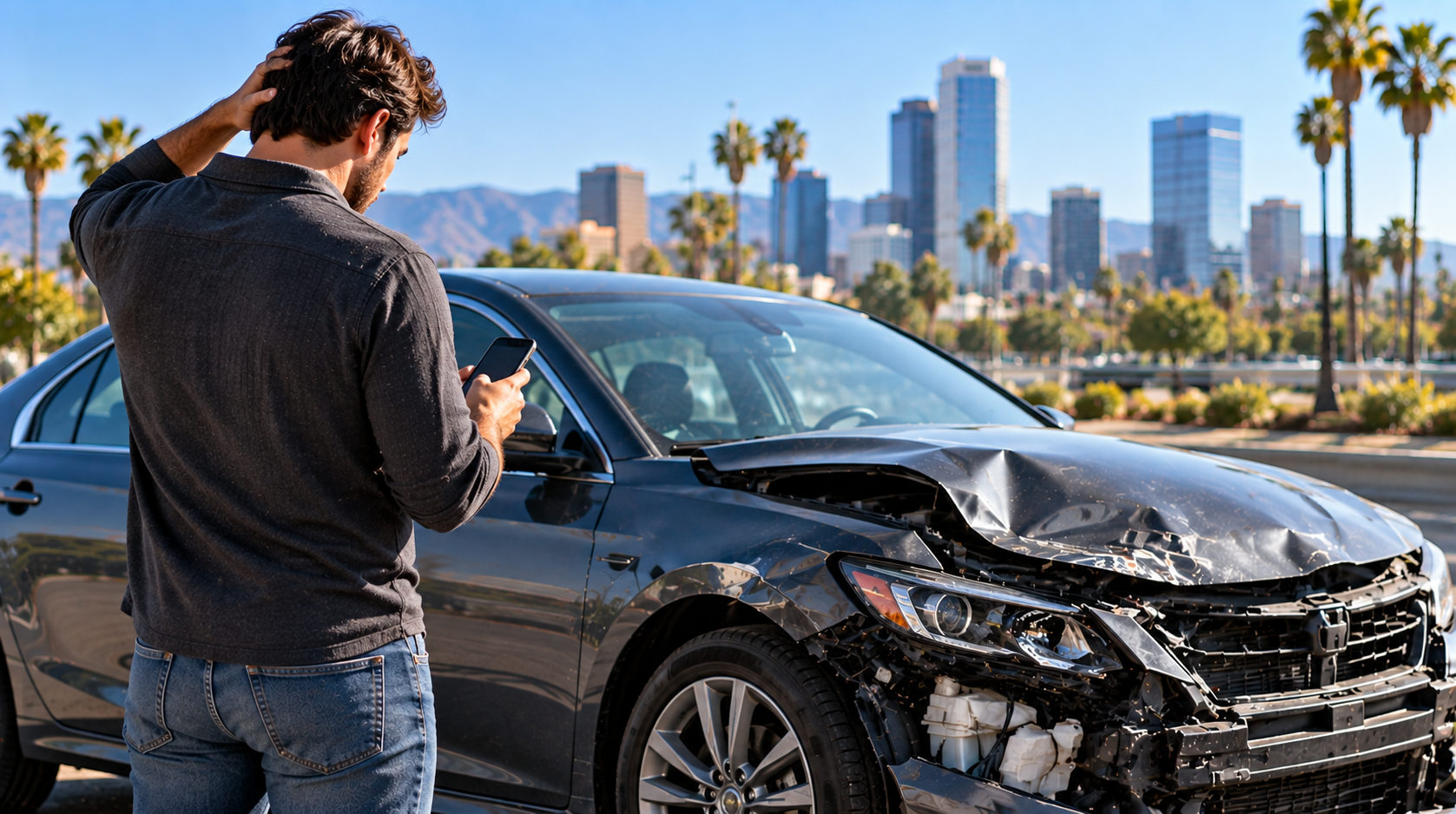
After a car accident, hearing an insurance adjuster say your vehicle is “totaled” can add another problem to an already stressful situation. You may still owe money on the car, need transportation for work, or disagree with what the insurance company says your vehicle was worth.
So, what is the totaled meaning when you're dealing with a California insurance claim? In simple terms, a vehicle can be considered a total loss when repairing it no longer makes economic sense compared with its pre-accident value.
But determining what you're actually owed can be more complicated.
A totaled vehicle isn't necessarily destroyed beyond repair.
Instead, a total-loss determination generally comes down to the relationship between the vehicle's pre-accident value, its repair costs, and its remaining salvage value.
That's an important distinction. A vehicle may still run or technically be repairable and nevertheless be considered a total loss for insurance purposes.
The decision should therefore be based on the specific vehicle and damage—not a universal rule that every car is automatically totaled once repairs reach a particular percentage of its value.
Once a vehicle is determined to be a total loss, its pre-accident value becomes particularly important.
Insurers commonly refer to this as the vehicle's actual cash value, or ACV. It generally reflects what the vehicle was worth immediately before the collision rather than what you originally paid for it or what a brand-new replacement would cost.
Factors that can affect a vehicle's value include:
If your vehicle was well maintained or had equipment that isn't accurately reflected in the valuation, review the insurer's report carefully.
You don't necessarily have to accept a valuation simply because an insurance company provided it.
Start by asking for the valuation report and reviewing the information used to calculate the vehicle's value.
Check details such as mileage, trim level, options, condition, and comparable vehicles. Incorrect information can affect the final figure.
It can also help to gather your own documentation, including:
The appropriate way to challenge a valuation can depend on which insurance policy is involved and the terms of that policy.
This is where a total loss can become financially difficult.
Suppose you owe $20,000 on your auto loan, but the vehicle's applicable total-loss valuation is only $17,000. An insurance payment based on the vehicle's value doesn't necessarily erase the remaining loan balance.
You could still be responsible for the difference.
That's where gap coverage may become relevant.
Gap coverage is intended to address certain situations in which the amount owed on a financed or leased vehicle exceeds the amount otherwise covered after a total loss.
Whether gap coverage applies—and how much it pays—depends on the specific contract.
If your totaled vehicle is financed, check your purchase or lease documents and insurance policy rather than assuming you either have or don't have gap protection.
A total-loss claim addresses the vehicle damage, but an accident can involve other losses as well.
If another driver's negligence caused the collision, property damage may be only one part of the overall situation.
For example, someone injured in a car accident may also be dealing with:
Tim Wright Law's car-accident practice specifically addresses both property damage and bodily injuries arising from vehicle collisions.
No. Damage to your vehicle and injuries to your body are different categories of loss, even when they result from the same collision.
Resolving the property-damage portion of an accident doesn't necessarily tell you what an injury claim is worth.
If you've been injured, the value of a personal injury claim may depend on factors such as the severity of your injuries, medical expenses, time away from work, future treatment needs, and how the injuries affect your daily life.
This is why it's important to understand exactly what an insurance settlement or release covers before agreeing to it.
If an insurer tells you your vehicle has been totaled, don't focus only on the final number.
Review how that number was calculated.
Confirm the insurer has the correct information about your vehicle, request the valuation report, review comparable vehicles, and determine whether you still owe money on a loan or lease.
Keep copies of accident photographs, repair estimates, valuation documents, loan information, correspondence with insurers, and any other paperwork related to the loss.
If you were injured in the collision, keep your medical and injury documentation organized separately as well.
Not every total-loss dispute requires an attorney.
Legal guidance may become more useful when the accident also caused significant injuries, fault is disputed, several insurance policies are involved, or you're concerned that resolving one portion of the claim could affect another.
A car accident attorney can review the broader circumstances of the collision and explain how the property-damage and injury portions of the claim may fit together.
A totaled vehicle doesn't always mean the car is physically beyond repair. It generally means the economics of repairing the vehicle no longer justify doing so under the applicable total-loss calculation.
If that happens, pay close attention to how your vehicle was valued. Check the information the insurer used, understand what happens to any remaining loan balance, and determine whether gap coverage applies.
And if the accident also left you injured, remember that the value of your vehicle and the value of your injury claim are separate issues. Understanding both can help you make more informed decisions after a serious collision.


