

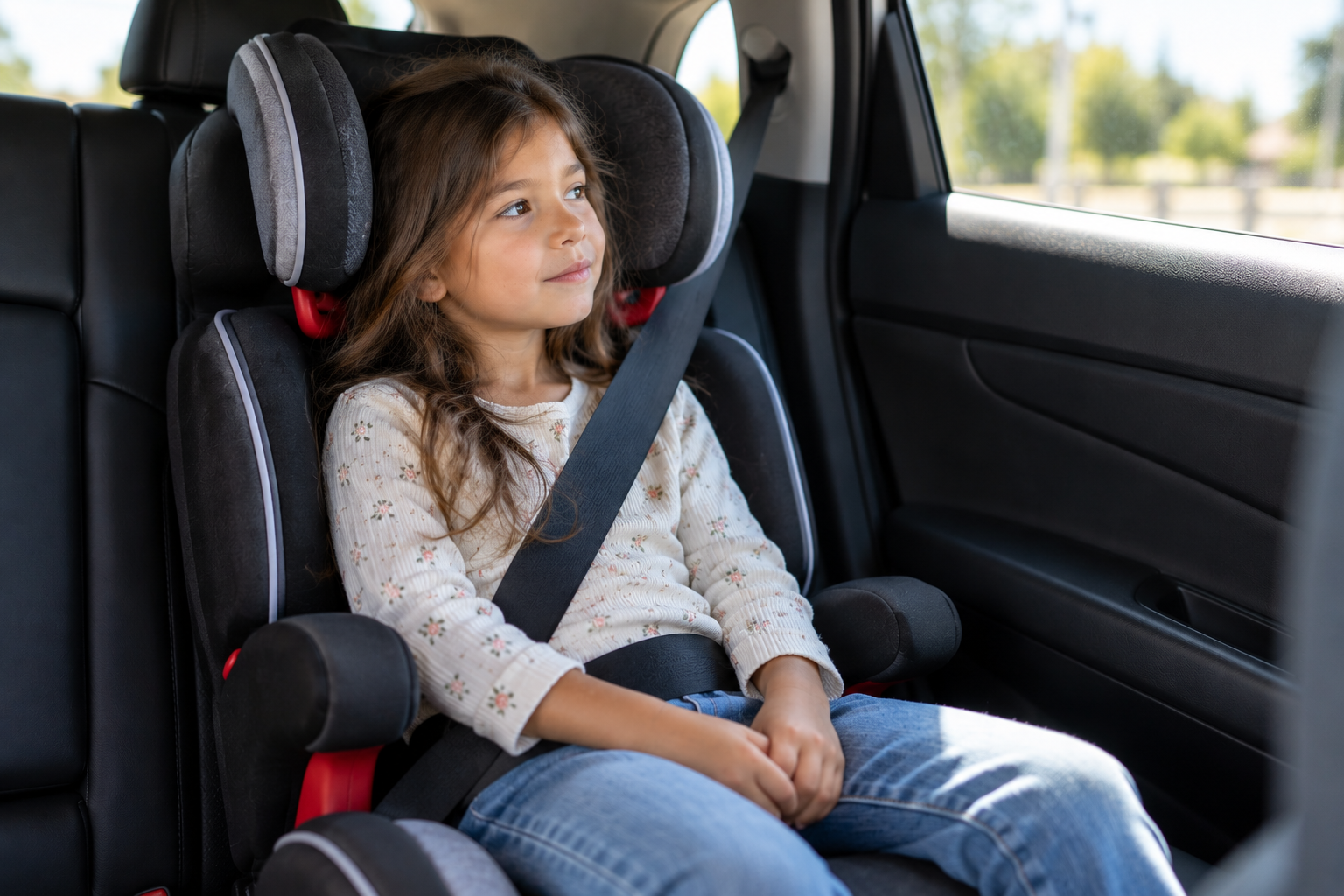
Keeping children properly secured in the car isn't just a safety recommendation in California—it's required by law. But the rules can be confusing, especially as children grow and move from rear-facing seats to forward-facing seats, boosters, and eventually a standard seat belt.
Understanding the CA car booster seat law can help parents know when it's appropriate to make that transition and how to keep their children properly restrained on the road.
California law generally requires children under 8 years old to be secured in an appropriate car seat or booster seat in the vehicle's rear seat. Children who are 8 years old or who have reached 4 feet 9 inches in height may use a properly fitted seat belt instead.
There's an important distinction here: California law does not establish a specific age when every child must move from a forward-facing harness to a booster. Children should remain in a harnessed seat until they have outgrown the manufacturer's height or weight limits.
California's child-restraint requirements generally work like this:
The right restraint also depends on the child's size and the manufacturer's requirements for the specific car seat.
Legally, a child who is at least 8 years old or has reached 4 feet 9 inches may transition to a standard seat belt in California.
That doesn't necessarily mean every 8-year-old is ready.
The seat belt should fit correctly, with the lap portion sitting low across the hips or upper thighs and the shoulder belt crossing the chest rather than the neck or face.
Parents can use a five-step seat belt fit test to determine whether their child is ready. A properly fitted seat belt generally means the child can sit all the way back against the seat, comfortably bend their knees at the seat's edge, keep the lap belt low across the hips or upper thighs, position the shoulder belt across the chest, and remain seated that way for the entire trip.
If the belt doesn't fit correctly, continuing to use a booster may be the safer option.
California generally requires children under 8 to ride in the rear seat while properly secured in an appropriate child restraint. There are limited exceptions, such as vehicles without a rear seat or situations where a child restraint cannot be properly installed there.
A rear-facing child restraint should never be placed in front of an active passenger airbag.
Even after a child is legally old enough to use a standard seat belt, the back seat is generally considered the safer place for younger passengers.
Even when parents use the right type of restraint, proper installation and fit still matter.
Some common mistakes include:
Parents who aren't sure whether a restraint is being used correctly can consider having the seat inspected by a trained child passenger safety technician.
When a child is injured in a collision, determining what happened can involve much more than looking at the car seat.
The circumstances of the crash, the conduct of the drivers involved, the child's injuries, medical treatment, vehicle damage, witness statements, and available photographs or video may all become important.
Questions about how a child was restrained may also arise during an insurance claim. Because every collision is different, parents shouldn't assume that a car-seat issue automatically determines whether they can pursue compensation for their child's injuries.
If your child is involved in a collision, getting appropriate medical attention should come first. Some injuries may not be immediately obvious, particularly when a child has difficulty explaining how they feel.
Parents should also consider preserving the child restraint involved in the crash rather than immediately throwing it away. Keep photographs of the seat and vehicle, medical records, receipts, insurance correspondence, and other information related to the collision.
Depending on the circumstances, an attorney can also help a family understand how California's traffic and personal injury laws may apply.
California's child passenger safety requirements establish minimum legal standards, but the safest restraint for a particular child may depend on their height, weight, development, vehicle, and the manufacturer's instructions.
Checking current guidance from the California Highway Patrol and following the instructions for your child's specific restraint can help you decide when it's actually time to move to the next stage.
If your child has been injured in a California car accident, Tim Wright Law can review what happened and help you understand your family's legal options.


